Play That Funky Music
The opening is almost a setup.
That guitar riff.
Dun-dun-dun-dun…
And you’re thinking, OK…where is this going?
Then BOOM.
The drums kick in. The bass starts moving. Rob Parissi starts singing—and suddenly this isn’t rock anymore.
It’s FUNK.
And not just funk.
FUNKY.
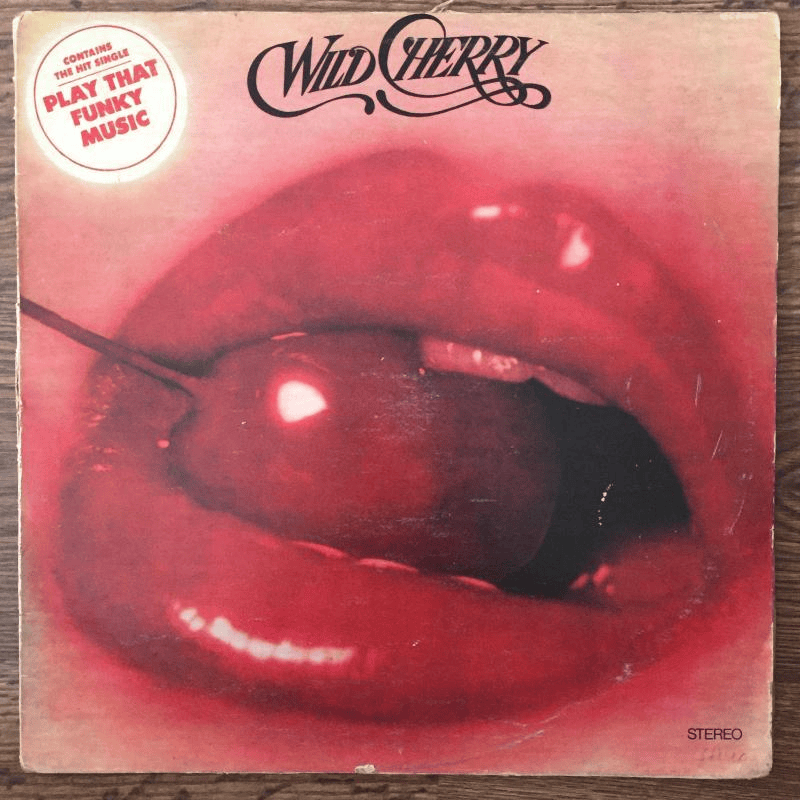
Wild Cherry’s “Play That Funky Music” was released in 1976 and went all the way to #1 on the Billboard Hot 100. And the really remarkable thing about it is that it didn’t sound like the typical #1 records surrounding it.
It had disco in it.
It had rock in it.
It had funk in it.
It had that hard-driving guitar.
It was like somebody took a rock band, threw them into a disco club, and said:
“OK…now make everybody dance.”
And somehow…they did.
And then there was the “White Boy” moment.
This is one of the things that makes the record’s story so interesting.
Rob Parissi was a white rock musician from Ohio. Wild Cherry had originally been playing rock music in clubs. According to Parissi’s account, while the band was performing in a club that was predominantly Black, he heard people calling out for them to “play some funky music.”
That became the inspiration for the song.
And there’s something almost perfect about the fact that Parissi apparently wrote himself into the song as the “white boy.”
The lyric isn’t really an insult. It’s almost a challenge:
You may be a rock musician…
…but can you bring the funk?
And then comes that line.
“Play that funky music, white boy!”
You hear this record coming through the radio, and you’re hearing this funky, soulful, powerful voice over this incredibly funky arrangement.
You don’t necessarily picture a white guy.
Then you finally see the band on television and—
WAIT A MINUTE…THAT’S THE WHITE BOY?!
😂
And suddenly the lyric makes a whole lot more sense.
And that shout-along section…
This is where the song became bigger than just a hit record.
“They were dancin’ and singin’…”
That wasn’t a lyric anymore.
That was a party command.
You didn’t sing it.
You SHOUTED IT.
And that’s an important distinction.
There are songs people listen to.
There are songs people dance to.
And then there are songs where the DJ doesn’t even have to be involved anymore because the crowd takes over.
“Play That Funky Music” became one of those songs.
Put it on at a party and eventually somebody is going to yell:
“They were DANCIN’ AND SINGIN’…”
And everybody else knows exactly what comes next.
But here’s the REALLY interesting part…
You remembered something that gives this song a fascinating cultural-history angle: how different radio stations handled “white boy.”
That is worth putting into the article because it illustrates something about 1970s radio that we sometimes forget.
There wasn’t one universal radio culture.
You had Black-oriented stations, Top 40 stations, rock stations, R&B stations—and they could make very different programming decisions about the exact same record.
So while some pop stations were perfectly comfortable playing the lyric as recorded, some Black radio stations apparently edited or bleeped the phrase.
And that makes the record even more interesting in the context of its time.
Because this wasn’t simply a novelty record about a white guy trying to play funk.
It was a white rock musician crossing into a predominantly Black musical tradition, and doing it successfully enough that Black audiences, R&B stations and mainstream pop audiences all embraced the record—while still negotiating how that lyric landed in different communities.
That’s a much richer story than simply:
“Hey, remember that one-hit wonder?”
And THAT’S why it belongs in this series.
Because when you think about the summer of 1976, you can almost hear the radio.
Disco was exploding.
Funk was everywhere.
Rock was still huge.
And then along comes this band called Wild Cherry with a song that somehow sits right in the middle of all of it.
Rock guitar.
Funk bass.
Disco rhythm.
Soulful vocals.
A giant sing-along chorus.
And one of the most recognizable opening riffs of the decade.
It wasn’t trying to sound like everything else on the radio.
It took pieces of everything else on the radio and made something completely its own.
And that’s the beauty of Raised by Radio.
Because sometimes you hear a song and think:
“That’s a great song.”
But every once in a while, you hear one and think:
“What the heck IS this?”
And in 1976, when that guitar riff gave way to that funk…
nothing on the radio sounded like it.


Leave a Reply