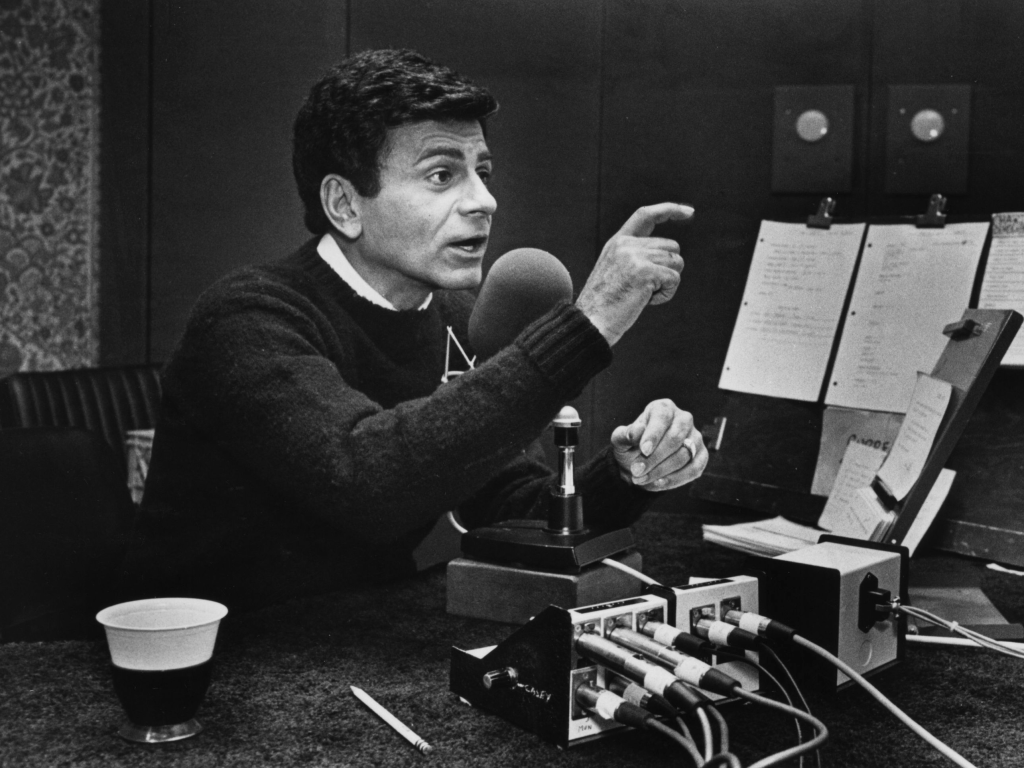
American Top 40 with Casey Kasem wasn’t just a radio show—it was an event.
If you grew up in the 70s and 80s, the weekend didn’t officially start until you heard that familiar voice:
“The hits from coast to coast…”
From its debut in 1970, American Top 40 turned the simple act of counting down songs into high drama. And at the center of it all was Casey Kasem, the steady, enthusiastic ringmaster of America’s musical circus.
He Made It Feel Big
Casey didn’t just read chart positions—he built anticipation.
- “The highest debut of the week…”
- “The biggest mover…”
- “Holding at number two for the third week…”
You could feel the momentum.
When the Bee Gees dominated the late 70s, it felt like we were living through a musical takeover. When Michael Jackson ruled the 80s, Casey’s tone would lift just enough to say, Pay attention—this is history.
He didn’t overhype it. He didn’t undersell it. He knew how to add just a notch of excitement, so we understood: this mattered.
The Soundtrack of a Generation
American Top 40 wasn’t just about hits—it was about context.
Casey gave us:
- Backstories on artists
- Trivia about songwriters
- Chart records being broken
- Connections between past and present
You didn’t just learn what was number one.
You learned why it was number one.
And for kids in small towns—or cities like mine—it made you feel connected to something bigger. The same song blasting in Los Angeles was spinning in New York, Chicago, Dallas… and right there in your bedroom.
The Long-Distance Dedications 💌
And then there were the Long-Distance Dedications.
Those weren’t just song requests—they were emotional moments.
Soldiers overseas.
High school sweethearts separated by miles.
Parents reconnecting with estranged children.
Casey would lower his voice. Slow the pacing.
Sometimes you could hear the lump in his throat.
It reminded us that these weren’t just chart-toppers.
They were soundtracks to real lives.
A Weekly Ritual
There was something ceremonial about it:
- Waiting through commercials.
- Guessing what would hit number one.
- Recording your favorite songs on a cassette (and hoping the DJ wouldn’t talk over the intro).
It taught us patience. Anticipation. Celebration.
The countdown gave the music structure—and it gave our weekends rhythm.
Still Counting Down
The fact that you (and many of us) still listen to the reruns says something powerful.
It’s nostalgia, yes.
But it’s also craft.
Casey made radio feel important. He made pop music feel historic. He made listeners feel included.
He turned a list into a story.
And maybe that’s why it still works today.
 Raised by Radio
Leave a comment